
El Niño Storm Prep
It's Not Too Late to Get Your Yard Ready for El Niño Storms
A practical checklist for handling heavy rain, runoff and erosion before this winter's storms arrive, from clearing gutters to building an edged dry creek bed.
A very strong El Niño is on the way, and for much of the southern U.S. and the East Coast that means a wetter-than-average winter. Heavy rain can pool against foundations, wash mulch and soil into streets and storm drains, carve ruts through beds and turn lawns into mud. The good news: it's not too late to get your yard ready for El Niño storms.
This guide walks homeowners and landscape professionals through the steps that matter most before the rain arrives, from clearing gutters and planning runoff paths to staging erosion control and choosing edging that holds up in wet ground. It draws on guidance from NOAA, FEMA, the EPA and university Extension programs, plus our experience manufacturing recycled plastic landscape edging at Epic Plastics.
Quick answer: How do you get your yard ready for El Niño storms?
To get your yard ready for El Niño storms, clear gutters, downspouts and drains of leaves and debris, send downspout water away from the house, fix low spots where water pools, give runoff a planned path such as an edged dry creek bed or rain garden, cover bare soil with mulch, secure bed borders, stage sandbags or erosion control bags before the first big storm, turn off irrigation once the rains begin, and store or secure outdoor furniture.
What Does a Strong El Niño Mean for Your Yard?
What is El Niño? El Niño is a natural climate pattern marked by warmer-than-normal ocean surface temperatures in the central and eastern tropical Pacific. A strong event can shift the Pacific jet stream, and in winter, El Niño typically brings wetter conditions across the southern United States, according to NOAA.
The 2026–27 winter outlook
NOAA's 2026–2027 U.S. Winter Outlook, released October 15, 2026, expects a very strong El Niño. For December through February, it favors wetter-than-average conditions across the southern U.S., from California to Florida, and along the Eastern Seaboard.
For your yard, more rain means more runoff, saturated soil, erosion on slopes, mulch and rock washing out of beds, and water collecting against the house. Good El Niño yard prep comes down to three goals: move water away from structures, slow it down so it can soak in where the soil can take it, and keep soil, mulch and rock where they belong.
How to Get Your Yard Ready for El Niño Storms: 10 Steps
Start with the steps that protect your house, then work outward into the landscape. Do this work on dry days when you can, because walking on saturated soil compacts it.
1. Clear Gutters, Downspouts and Drains of Leaves and Debris
Fall leaves are the first thing El Niño rain will find. Clogged gutters overflow, spill water against the foundation and send it where you don't want it. FEMA's FloodSmart program recommends removing debris from gutters and downspouts to avoid an accumulation of water.
- Clean gutters, downspouts and rain chains after the last leaves drop, and check them again after each big storm.
- Clear yard drains, channel drains, catch basins and drain grates so water has somewhere to go.
- If the storm drain on your street is clogged with leaves, clear it from the curb only when it's safe, or report it to your city.
- Compost the leaves or use them as mulch in beds that have a secure border, not where they can wash back into a drain.
2. Send Downspout Water Away From the House
Every downspout is a concentrated stream of water during a storm. Add extensions or splash blocks so water discharges away from the foundation, and point it toward lawns, planting beds, a rain garden or a dry creek bed instead of pavement. Redirecting downspouts and using rain barrels to capture roof runoff are both practices recommended by the EPA's Soak Up the Rain program. Check with your city before connecting downspouts to a storm drain.
3. Find and Fix Low Spots Before the Ground Is Saturated
The next rain will show you exactly where water collects. Walk the property during or right after it and note puddles, soggy turf and spots where water runs toward the house. UC Master Gardeners recommend watching for water that collects after rainfall and repairing low or poorly drained areas. Fill low spots next to the foundation so soil slopes away from the house, and fix grading problems during a dry stretch.
4. Give Runoff a Planned Path
Water that has a route is far less destructive than water that finds its own. Shallow swales, rain gardens and dry creek beds carry runoff away from structures and give it a chance to soak in. Oregon State University Extension notes that rain gardens slow water and let it soak in, reducing erosion and flooding. Our article on edging for water management and erosion control covers layout ideas.
5. Cover Bare Soil and Protect Slopes
Bare soil is what heavy rain carries away first. UC Master Gardeners advise adding mulch to any bare ground to prevent compaction from rainstorms. Spread a layer of mulch over exposed soil, keep slopes covered with plants or mulch, and pay extra attention to beds at the bottom of slopes, where washed-out soil and mulch tend to collect.
6. Secure Edging and Bed Borders
Edging is what keeps mulch, soil and decorative rock inside the bed when water starts moving. Before the storms, walk every edging line:
- Press lifted sections back into place, tap loose stakes deeper and replace any broken stakes.
- Backfill and firmly compact soil along both sides of the edging so water can't undercut it.
- Keep mulch about an inch below the top of the edging so it doesn't float over the border, one of our landscape edging maintenance tips.
- Check corners, curves and the low ends of beds, where moving water hits hardest.
Material matters in wet ground. Wood edging that sits in soggy soil is prone to rot, while Benda Board® is made from recycled plastic and won't rot or splinter. Pair any edging with the right stakes and accessories, and follow the install guides in our Document Library for trench depth and stake spacing.
7. Stage Sandbags and Erosion Control Bags Now
This one has nothing to do with edging, but it's always smart before wet weather: have sandbags or erosion control bags ready before the first storm warning, when everyone else is looking for them. Use them to steer water and mud away from doorways, garages and the base of slopes.
Know their limits. A Los Angeles County homeowner's guide notes that properly filled and placed sandbags will redirect storm and debris flow away from property improvements, but they will not seal out water and are meant for low flows. The same guide recommends:
- Filling bags about halfway.
- Folding the top under and placing it facing upstream so moving water doesn't open the bag.
- Limiting placement to two layers unless a building backs them up or the bags are pyramided.
- Not using straw or hay bales in place of sandbags.
Burlap bags break down after months of wetting and drying, so store filled bags out of the weather and place them when storms are in the forecast. Check with your city or county about sandbag and sand pickup locations.
8. Turn Off Irrigation When the Rains Arrive
Sprinklers running on top of storm rain only add runoff. UC Master Gardeners advise reducing irrigation or turning it off completely when rainfall is adequate, and watering plants under eaves and overhangs that rain doesn't reach. If your controller has a rain sensor or a weather-based setting, make sure it's turned on.
9. Check Sump Pumps and Secure Outdoor Items
FEMA notes that a working sump pump and a water alarm can minimize flood damage in a basement, and it suggests a battery-operated backup in case the power goes out. Test yours before the rainy season. Then store or tie down patio furniture, cushions, umbrellas, trash bins and anything else that can blow around or float.
Beyond the yard: most homeowners and renters insurance does not cover flood damage, and FEMA says National Flood Insurance Program coverage generally takes effect 30 days after purchase. If flood coverage is something you're considering, don't wait for the forecast.
10. Document Problem Areas and Plan Upgrades
El Niño storms will show you where your landscape needs help. Take photos during and after heavy rain: where water pools, where mulch and rock washed out, where edging moved and where lawn areas turned to mud. Those notes become your project list for the next dry stretch. Compare materials in our guide to choosing landscape edging, and find a dealer near you so materials are ready when you are.
How to Build a Dry Creek Bed That Handles Heavy Rain
What is a dry creek bed? A dry creek bed is a shallow, rock-lined channel that collects runoff during storms, carries it to a safe spot and sits dry between rains. Landscape contractors often design one as a decorative rock river that winds through beds and lawn, so the drainage system doubles as a design feature.
The goal is to slow water down and let it soak in, not rush it to the street. UC Master Gardeners describe a rock-lined swale built on a gentle slope that lets runoff soak into the soil within a day or two. Ending the channel at a rain garden adds even more capacity.
Why Edging Holds a Rock River Together
Edging is what keeps a rock river looking like a river after the first big storm. Without a defined border, moving water pushes rock into the lawn while soil and mulch slide into the channel.
- Follow natural curves. Benda Board® flexes to follow a meandering channel, and because it's made from recycled plastic, it won't rot or splinter in wet ground.
- Handle long runs and sweeping bends. Along long banks and broad curves, Epic Edge® adds a natural wood-grain look with minimal expansion and contraction.
- Lock in both banks. Edge both sides of the channel so rock stays in and soil, mulch and turf stay out, and stake the edging as the install guide directs so it holds when the channel is running.
How to Plan a Dry Creek Bed Before the Storms
- Watch where the water goes. During the next rain, note where runoff starts (downspouts, patios, driveways and slopes) and where it pools.
- Choose a safe outlet. Route the channel downhill and away from the house to a rain garden, a lawn area or an approved drainage point. UC Master Gardeners recommend keeping swales at least 5 feet from structures without a basement and 10 feet from structures with one.
- Shape a gentle channel. Dig a meandering channel at least 6 inches deep with a minimum 2% slope so water keeps moving. A natural-looking channel is usually about twice as wide as it is deep.
- Line it with rock. Set larger stones and boulders along the banks, at bends and where water enters, then fill the bed with smaller river rock.
- Edge the banks. Install edging along both sides to keep rock in place and keep soil and mulch out of the channel.
- Check the rules before you dig. Ask your local jurisdiction before redirecting downspouts or connecting to a storm drain, keep runoff from flowing onto neighboring properties and call 811 to have underground utility lines marked.
For landscape contractors: A rock river turns a client's drainage problem into a design feature. Walk the site during or right after a storm, lay out the channel where water actually flows and include edging for both banks in the quote so the rock stays where you put it.
Should You Switch to Synthetic Turf Before El Niño?
If part of your lawn turns to mud every rainy season, especially high-traffic areas, play spaces and dog runs, synthetic turf is worth a look. UC Master Gardeners of Santa Clara County note that artificial turf gives a consistent surface regardless of weather, avoids brown spots and muddy areas, and doesn't need regular mowing or fertilizing.
The perimeter is where turf installations hold up or fail, especially when the ground is wet. Turf Edge is a hidden anchoring solution that simplifies installation and adds durability to the edge. Benda Board® can also anchor turf at the perimeter; see our video on synthetic turf installation with the Benda Board anchoring system.
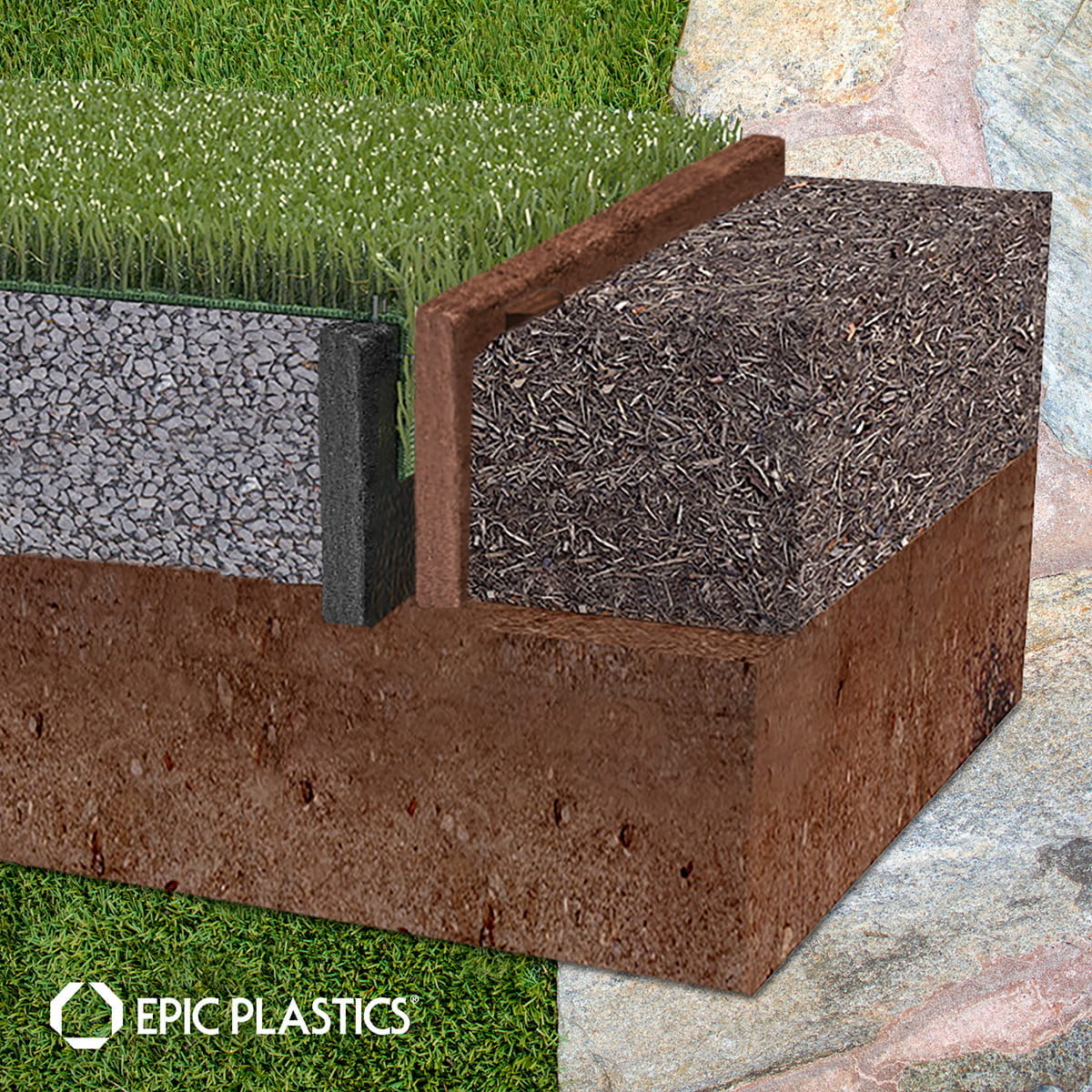
Plan the drainage, too. Turf isn't a drainage fix on its own: the same UC Master Gardeners page cautions that artificial turf can inhibit natural drainage and promote runoff. Grade the base so water drains toward a safe outlet, such as a dry creek bed or rain garden, and schedule base work for a dry stretch. Check local rules before you buy, since California law now lets cities and counties restrict synthetic turf installation.
Common El Niño Yard Prep Mistakes to Avoid
- Leaving leaves in gutters, downspouts and drains. Clogs send water over the edge and against the house.
- Letting downspouts dump water at the foundation or onto pavement. Redirect runoff toward lawns, beds, a rain garden or a dry creek bed.
- Leaving bare soil exposed on slopes. Cover it with mulch or plants before heavy rain.
- Running sprinklers after the rains begin. Turn irrigation off or down once regular rain arrives.
- Waiting for a storm warning to find sandbags. Stage them early.
- Sending runoff onto a neighbor's property or into the street without checking local rules.
- Ignoring loose edging. Once water gets under a border, mulch, soil and rock wash out fast.
El Niño Yard Prep Checklist
Use this checklist to get your yard ready for El Niño one task at a time.
| Task | When | Why it matters |
|---|---|---|
| Clear gutters, downspouts and drains | Now, and after each big storm | Prevents overflow and water against the foundation |
| Extend or redirect downspouts | Before the first big storm | Keeps roof water away from the house |
| Fix low spots and grading | During a dry stretch | Stops standing water near structures |
| Plan a path for runoff | Before heavy rain | Slows water and lets it soak in |
| Mulch bare soil and slopes | Before heavy rain | Reduces erosion and compaction |
| Re-secure edging and bed borders | Before heavy rain | Keeps mulch, soil and rock in place |
| Stage sandbags or erosion control bags | Before the first storm warning | Redirects water and mud away from structures |
| Turn off or reduce irrigation | When regular rain begins | Avoids saturating soil and adding runoff |
| Test the sump pump and secure outdoor items | Before the first big storm | Limits flood and wind damage |
| Photograph problem areas | During and after storms | Builds your next project list |
El Niño Yard Prep FAQs
When should I start getting my yard ready for El Niño?
Now. NOAA's 2026–2027 outlook favors a wetter-than-average December through February across the southern U.S. and the Eastern Seaboard. Clear gutters, fix drainage and stage erosion control before the first big storm, and do soil work on dry days.
How can I protect my yard from flooding during an El Niño winter?
Clear gutters, downspouts and drains, point downspouts toward lawns or beds instead of pavement and fill low spots where water pools. Then give runoff a planned path, such as an edged, rock-lined dry creek bed that carries water to a rain garden or another safe outlet away from the house.
What is a dry creek bed, and does it help with drainage?
A dry creek bed is a shallow, rock-lined channel that carries storm runoff to a safe outlet and sits dry between rains. Built on a gentle slope, it slows water so more of it soaks into the soil. Edging along both banks keeps the rock in place and keeps soil and mulch out of the channel.
Do sandbags really help in heavy rain?
Yes, for low flows. Properly filled and placed sandbags can redirect water, mud and debris away from doorways, garages and other improvements, but they won't seal out water. Fill bags about halfway, place the folded top facing upstream and keep them stored out of the weather until storms are forecast.
Is synthetic turf a good option for a yard that floods or turns to mud?
It can solve mud in high-traffic areas, but it isn't a drainage fix on its own. Artificial turf can inhibit natural drainage and promote runoff, so grade the base toward a safe outlet and secure the perimeter with Turf Edge or Benda Board anchoring. Check local rules before you buy.
Should I turn off my sprinklers during El Niño?
Yes. Reduce irrigation or turn it off completely when rainfall is adequate, and water only plants under eaves and overhangs that rain doesn't reach. Running sprinklers on top of storm rain saturates soil and adds runoff.
How do I keep mulch and rock from washing away in heavy rain?
Secure bed borders with edging set firmly in compacted soil, keep mulch about an inch below the top of the edging and give runoff a planned path so it doesn't cut across beds. Recycled plastic edging won't rot in wet soil the way wood can.
Can you install landscape edging during the rainy season?
Yes, between storms, when the soil is workable but not waterlogged. Avoid working saturated soil, which compacts easily, and follow the manufacturer's installation guide for trench depth and stake spacing.
About Epic Plastics
Epic Plastics manufactures landscape edging made from recycled plastic in Lodi, California, including Benda Board®, Epic Edge®, EDGE EX®, Benda Board® FLEX and Turf Edge. The company has diverted 300 million pounds of post-consumer plastic from landfills since 1997, and its products are sold through more than 750 supply houses across the United States and Canada.
Get Your Landscape Ready for the Rainy Season
Secure borders keep mulch, soil and rock in place when the storms hit. Explore Epic Plastics recycled plastic landscape edging, then find a dealer near you to plan your next project.
EXPLORE EDGING PRODUCTS FIND A DEALER300 MILLION POUNDS
OF POST-CONSUMER PLASTIC SAVED FROM LANDFILLS SINCE 1997
PLANT
104 East Turner Road
Lodi, CA 95240
Weekdays:
8am – 4pm
Phone:
209.333.6161
Support:
info@epicplastics.com

© 2026 Epic Plastics. Website designed & managed by Elevate Advertising.
Recent Comments